Simulation Validated Updated: 2026-01-27

Wireless Timing,
Near the Physics Limit.

Sub-picosecond wireless synchronization through chronometric interferometry. Validated in E1 LoS simulation @ 5.8 GHz, 30 dB SNR, 2 ms integration.

2.17 fs Theoretical Limit (CRLB) Physics ceiling @ 5.8 GHz
≈2.7 fs E1 LoS Simulation Estimator within ~1.2× of CRLB
≈69× PTP Improvement Synthetic A/B comparison

Commercial relevance: 6G JCAS networks, industrial TSN, and distributed sensing demand picosecond synchronization. Current wireless solutions (GPS, PTP) degrade indoors; fiber solutions (for example, White Rabbit) can cost tens of thousands per node. We are building toward fiber-class timing over RF with evidence-driven milestones.

This Is

  • ✓ Physics-bounded timing estimator (CRLB within ~1.2×)
  • ✓ Reproducible simulation pipeline (E1–E16)
  • ✓ Failure-mode mapping for LoS/multipath regimes
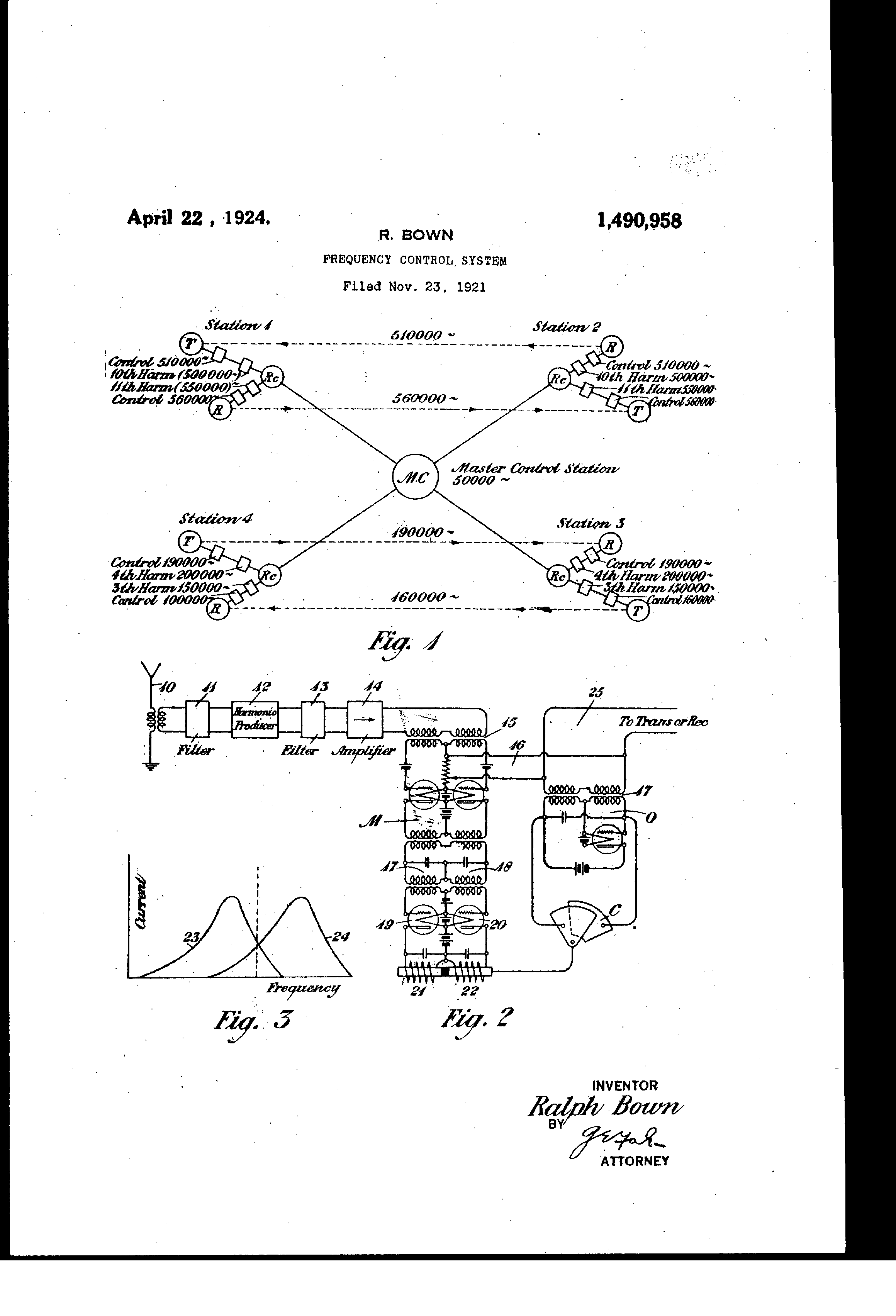
  • ✓ Patent-pending core innovations

Not Yet

  • ○ Hardware loopback validated (Tier 1)
  • ○ Over-the-air RF demonstrated (Tier 2)
  • ○ Multipath-robust production system
  • ○ Shipping timing module

Proof, Not Promises

Every claim paired with conditions, evidence path, and date

Theoretical Bound 2026-01-27
2.17 fs
E1 CRLB Timing Precision
Conditions: 5.8 GHz • 30 dB SNR • 2 ms • 80k samples
Evidence: results/snapshots/e1_investor_demo.json
Reproduce: python scripts/run_experiment.py e1 --band 5.8GHz --snr-db 30 ...
Simulation Result 2026-01-27
≈2.7 fs
E1 LoS Timing RMSE
Conditions: 5.8 GHz • 30 dB SNR • 2 ms • LoS channel
Evidence: results/snapshots/e1_investor_demo.json
Gap to CRLB: ~1.2× (estimator efficiency)
Synthetic Comparison 2026-01-27
≈69×
PTP Interop Improvement
Conditions: Synthetic A/B • 600 s • 60 samples
Evidence: ptp_interop_results/investor_demo_plot_data.json
Caveat: Synthetic comparison using bridge hints; real PTP hardware pending.
Validation 2026-01-27
604 passed
Fast Test Suite
Conditions: pytest -m "not slow"
Evidence: results/investor_demo/fast_tests_output.txt
0 failed, 39 skipped

Visual Proof

Interactive demonstrations of the core physics

Interactive Beat Note Visualizer

E1 LoS Simulation
What this proves: Chronometric interferometry converts tiny time delays into measurable phase shifts. At 5.8 GHz, a 50 ps delay creates ~1000° of phase rotation in the beat note—amplifying sub-picosecond timing into detectable signals.
Signal 1 (reference carrier)
Signal 2 (delayed carrier)
Beat note (interference pattern φ)
Jitter band (±σ from noise)
LIVE SIM MODE (E1 LoS)

Wireless timing that approaches fiber precision. Compare jitter bands across technologies.

0 ps ≈ 15 mm light travel 200 ps
Phase Shift (φ):
Phase Noise (σφ):
Distance Noise (σd):
Status: SIMULATION

Figure A: Parameter Sweep Validation

What this proves: Timing precision scales predictably with SNR and integration time, matching CRLB theory.
τ RMSE heatmap showing precision vs SNR and duration
Left (A1): τ RMSE vs Duration/SNR. Lower is better (darker). Right (A2): 2σ coverage probability. Yellow indicates >95% of estimates within bounds.

Figure B: Hardware Sensitivity Analysis

What this proves: System identifies hardware impairment thresholds before they degrade timing.
Sensitivity sweeps for aperture jitter and DC offset
Left (B1): Aperture jitter tolerance. Right (B2): DC offset sensitivity. Both show sub-picosecond precision holds within practical hardware limits.

Why This Wins

Physics-bounded advantage + timing ecosystem integration

01

Physics-Bounded Moat

The Cramér-Rao Lower Bound sets a fundamental limit on timing precision. Our estimator achieves ~1.2× of this limit—there's no "better algorithm" to find.

~1.2× CRLB Estimator efficiency

Further algorithmic gains are bounded by the CRLB; the remaining risk is hardware and channel conditions.

02

Timing Ecosystem Integration

We don't replace existing timing infrastructure—we augment it. PTP bridge hints, GNSS-disciplined references, and TSN compatibility mean drop-in enhancement.

~69× PTP jitter reduction

Designed to augment existing timing stacks without replacing them.

03

Defensibility Stack

  • Patents: Core chronometric interferometry methods (pending)
  • Experimental barrier: Validation requires RF + signal processing expertise
  • First-mover: Early lead in wireless femtosecond timing; defensibility strengthens with hardware validation
  • Network effects: Performance improves with deployment density
04

Competitive Landscape

Technology Precision Medium
GPS ~1 ns Satellite RF
PTP ~100 ns Ethernet
White Rabbit ~10 ps Fiber
Driftlock Choir (E1 LoS sim) ~2.7 fs (sim) Wireless (sim)

Simulation indicates orders-of-magnitude resolution improvement; hardware validation is the next gate.

Plan + Ask

$1.2M pre-seed to hardware validation in 90 days

Capital Ask

$1.2M

Pre-seed for hardware validation

Use of Funds

  • $450k Reference-grade timing bench + disciplined clocks
  • $350k Real-time beat-note pipeline (FPGA/SBC)
  • $250k PTP/TSN interoperability + pilot integration
  • $150k Compliance, audit, contingency

90-Day Milestones

T1
Hardware Loopback Shared reference, traceable measurements, stable beat-note chain
T2
Short-Range RF Controlled LoS OTA with reproducible timing estimates
T3
Impairment Mapping Stress tests, failure modes, "refuse to claim" gates

Exit Criteria

Measurable thresholds that must be met:

Loopback RMSE ≤ 10 ps Against independent reference (traceable)
PTP bridge ≥ 10× jitter reduction Controlled A/B harness
Reproducible artifacts scripts/investor_demo.py produces clean summary on demand

No milestone counts without evidence. Every claim traceable to command + snapshot + threshold.

Investment thesis: The estimator behaves near the CRLB in reproducible simulation, and the next risk is hardware. This ask funds falsifiable milestones and traceable artifacts toward RF validation.

Technical Deep-Dive: How Chronometric Interferometry Works
01

Signal Generation

Two RF signals with precise frequency offset (Δf) transmitted simultaneously.

02

Beat Note Formation

Signals interfere at receiver, creating low-frequency beat note whose phase encodes time-of-flight.

03

Phase Extraction

Advanced signal processing extracts beat note phase with extraordinary precision.

04

Timing Calculation

Precision follows: στ = σφ / (2π · fcarrier)

τ = φmeasured / (2π · fcarrier)
We measure the phase of a derived interference pattern, which encodes carrier-referenced timing information at rates amenable to digital processing.

Understanding Femtosecond Scale

Distance: In 2.17 fs, light travels ~0.65 μm
RF Phase: At 5.8 GHz, 1 fs ≈ 0.036° phase shift
Compute: Below a single CPU clock tick—we measure phase, not time